
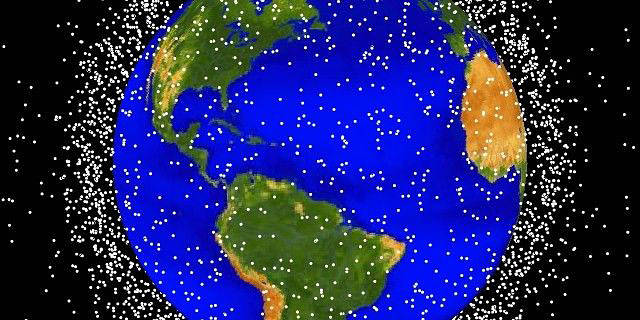
Over 27,000 pieces of garbage, or space junk, are now in the Earth’s orbit. Those that we can detect, that is. The term space junk encompasses both manmade objects, like debris from other space missions, and natural occurring objects, like small asteroids. Larger debris is detectable, but there still remains a countless amount of undetectable yet dangerous pieces of space junk floating around Earth’s orbit that can still deal catastrophic damage if a collision occurs on satellites and other objects that are intentionally placed into Earth’s orbit, like the International Space Station (ISS). On November 12, 2021, the ISS narrowly avoided a major impact with a piece of a decommissioned Chinese weather satellite. The ISS travels 4.76 miles a second; an impact with something at that speed could be disastrous.
On June 7, 2021, the ISS was hit by a small piece of space junk. Although it was small, its impact left a hole in one of the robotic arms on the ISS. This space junk can fly around at speeds up to 17,500 miles per hour, making any small particle over a centimeter able to penetrate the shields on the ISS. To make it even worse, the ISS’s onboard detection system can only detect bigger pieces of space junk (10 cm), leaving smaller pieces to potentially hit the ISS like this one.
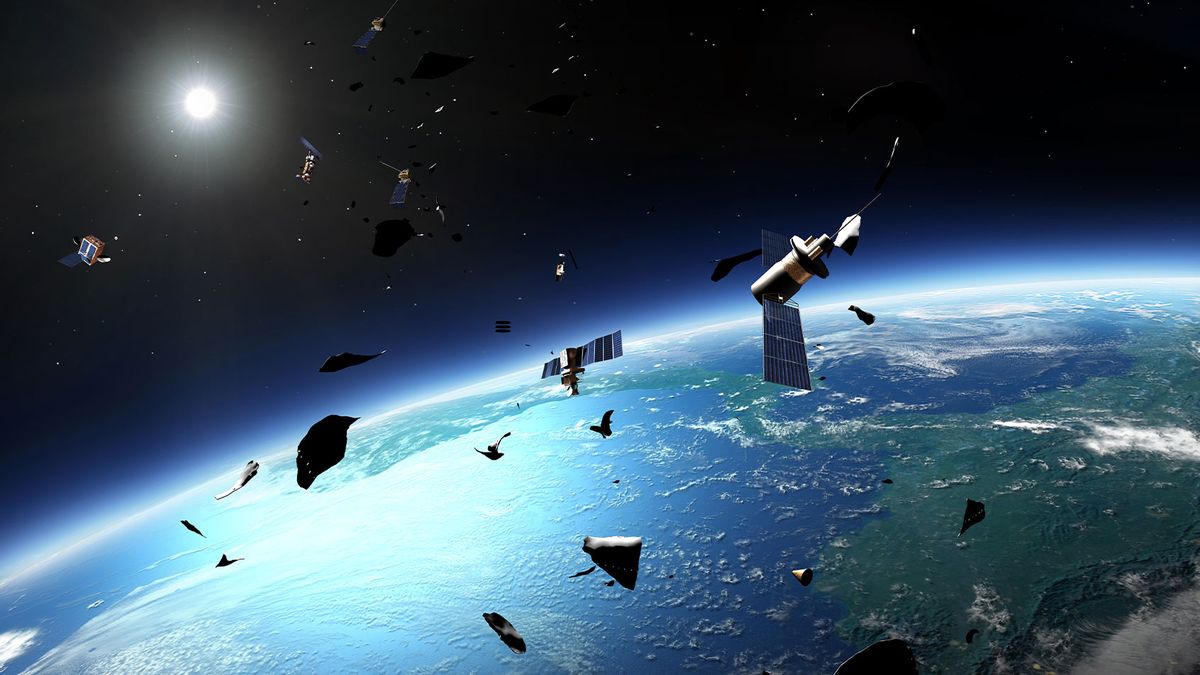
The increasing number of trash in Earth’s orbit due to more and more objects being sent into Earth’s orbit threatens the future of manned space travel and other missions as well. With every launch into space, more space junk is launched into orbit, making it increasingly risky to launch things into space. You may be thinking: Well, you can just throw a net over the pieces of junk, or shoot them out of the way, right? The problem is, there are just too many pieces of junk, in all different sizes, to take care of. And if you break them apart, they just become a lot of smaller pieces of space junk. Currently, some methods employed are :
There has recently been a new effort with new technology being implemented to combat the rise of space junk, the ELSA-d, a spacecraft meant to push old useless satellites back into Earth, ridding them from orbit.