
My grandpa was a very active and loving person. He would exercise every morning, go out for a run, drive, and play ping pong. He was a very optimistic person and loved to tell lots of stories. But in 2011, my grandfather’s kidneys started to fail. A few months later, he underwent surgery for peritoneal dialysis, the process of removing waste and excess fluid through an artificial machine - basically an external kidney. If that failed, then the only solution would be haemodialysis - cleaning directly through the blood. Peritoneal dialysis left my grandfather disabled. He carries 8 gallons of fluid from the garage to his room every day. Constantly, his abdomen bulges with fluid, which he changes twice a day. He is always too tired or too bogged down to do anything other than sit down and read a newspaper. He no longer smiles or tells stories.
This is why the Kidney Project is so important. It promises to “free kidney disease patients from dialysis machines and transplant waiting lists”, a promise that seems to be close to becoming fulfilled.
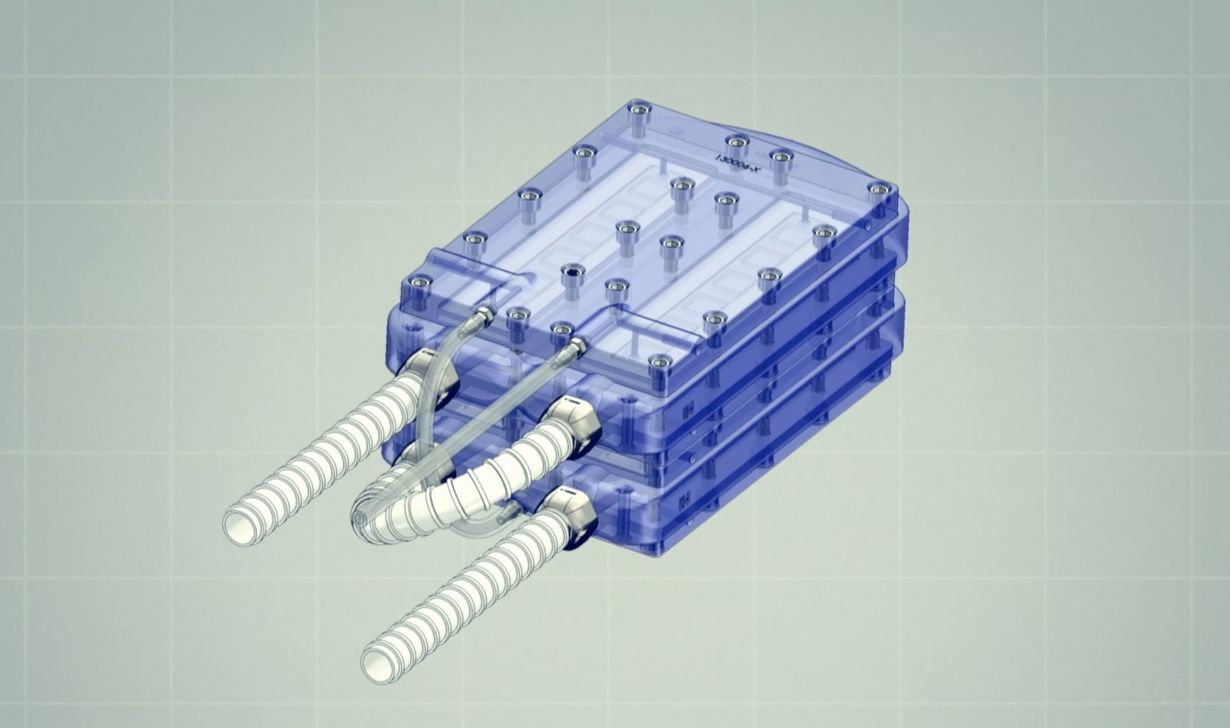
The Kidney Project is a nationwide collaboration led by Shuvo Roy, PhD of UC San Francisco, and William Fissell, MD of Vanderbilt University Medical Center. The Kidney Project’s project, a smartphone-sized implantable bioartificial kidney, uses a hemofilter and bioreactor (which basically replicate a kidney’s functions) to try and create an artificial replacement kidney. In the last few years, they have successfully tested both parts separately in different experiments. They even earned a $650,000 prize from KidneyX for demonstrating a working prototype. For the Artificial Kidney Prize, the team put together the two components into a “scaled-down version” of the kidney and evaluated its performance. It worked, powered by blood pressure alone.
As of now, this project is not released for use yet. With the help of funds from worldwide, this machine can be the future for saving lives. By combining the two components of the artificial kidney, the team may be able to create the first commercially available artificial kidney, and free dialysis patients from their fluid prisons.