
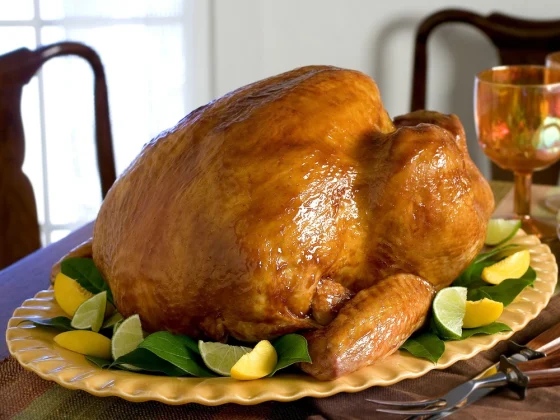
Early on in the American Thanksgiving saga, turkey had always been eaten. It wasn’t, however, an important staple on the Thanksgiving day dinner table. Recent evidence from the first meal between the colonists and Native Americans at Plymouth now indicates that turkey may not have even been served then—begging the question: why do we eat Turkey every Thanksgiving?
Thanksgiving only officially became an American Holiday in 1863, when President Lincoln issued a presidential proclamation stating it would be recognized as one. It was only then, after years of Thanksgiving fading in and out of relevancy that America and Thanksgiving and Turkey united. Even if the Turkey wasn’t as special as school teachers made out to be—with the significance of being served at the first Thanksgiving, they were still noted in the journals of both Native Americans and settlers.
However, our now Thanksgiving staple, the Turkey, has seen an increase in price from $1.14 a pound to $1.41 a pound over the span of one year (a standard 15 pound frozen Turkey costs an average of $21.15). Furthermore, aluminum prices reached it's all time high since 2011 at $2697 per metric ton, meaning not just the Turkey, but it's roasting pan will make a dent in your wallet. In short, Thanksgiving will be costly this year.
The basic principle of economics builds upon the concept of supply and demand with the goal of maximizing utility. When demand exceeds supply, a shortage is created. Thus, to maximize profits, manufacturers increase the price of the goods. Vice versa, if supply exceeds demand, a surplus is created, and price will decrease so that the market achieves equilibrium. This can be seen in the fact that in 2020, Turkey prices fell to its lowest since 2010. Due to the ongoing pandemic and the temporary shift away from large family gatherings, the volume of Thanksgiving dinners momentarily shrank, causing supply to exceed demand and Turkey prices to fall. A profit-maximizing Turkey-selling company would then decrease it's volume of Turkey production to offset the previous year's surplus. This interaction is seen in the fact that the total quantity of Turkey is 6% less than that of last year. Thus, with the rising costs of production and the apparent shortage in supply, it is inevitable that Turkey prices soar.
However, the recent uptick of Turkey prices is not merely a supply quantity issue. It is the compounding costs of labor and transportation in conjunction with bad weather and faulty fiscal policies that together make Thanksgiving an increasingly pricey holiday.